
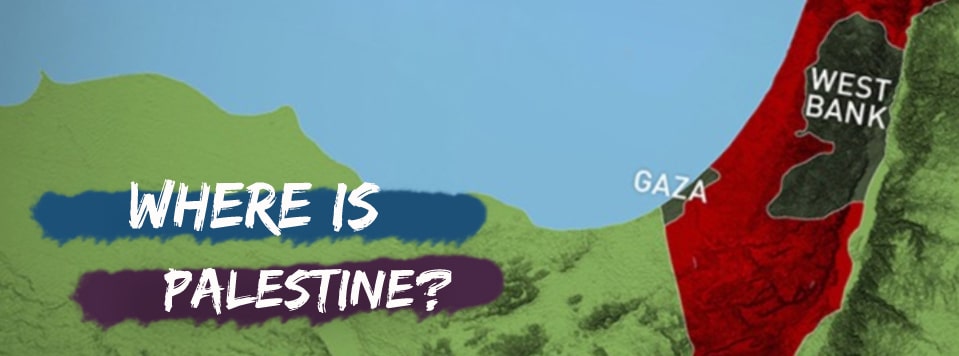
If you’re wondering, “Where is the West Bank?”, you’re not alone. This question is one of the most frequently asked by travelers, students, journalists, and volunteers alike. The West Bank plays a central role in the geopolitics of the Middle East, but many people struggle to locate it on a map or understand its borders and status.
In this 2025 guide, you’ll learn exactly where the West Bank is, why it matters, and what makes this region so unique. Whether you’re planning a visit, joining a volunteer program, or just want to be informed, we’ve got you covered.
What is the West Bank?
Before answering the question “Where is the West Bank?”, it’s essential to understand what the West Bank is. The West Bank is a landlocked territory located in the Middle East. It is situated between Israel to the west and Jordan to the east. The name “West Bank” refers to its location on the western side of the Jordan River.
The West Bank covers an area of approximately 5,640 square kilometers (2,180 square miles). It is home to around 3 million Palestinians, along with a number of Israeli settlements. Its major cities include Ramallah (the administrative capital), Hebron, Bethlehem, Nablus, and Jenin.
Geographical Location: Where is the West Bank Located?
The West Bank lies in the eastern part of historical Palestine, bordered by:
- Israel to the north, west, and south
- Jordan to the east, across the Jordan River
This region is roughly 50 km (31 miles) wide and 130 km (81 miles) long. It stretches from the southern area near Hebron up to the northern regions around Jenin and Tubas. The Dead Sea marks the southeastern edge of the West Bank.
From a global perspective, if you’re looking at a map of the Middle East, find Jerusalem—the West Bank is located immediately to the east of it.
Why is it Called the “West Bank”?
The term “West Bank” comes from the west bank of the Jordan River, which forms the territory’s eastern boundary. After the 1948 Arab-Israeli war, Jordan controlled the territory, and the name became popular in international discussions. Even though it lies to the east of Israel, it’s west of the Jordan River—hence the name.
Is the West Bank Part of Israel?
One of the most complex aspects of the question “Where is the West Bank?” involves its political status. Geographically, the West Bank is not part of the internationally recognized territory of Israel. However, Israel has maintained military control over large parts of the region since the 1967 Six-Day War.
Today, the West Bank is divided into three areas:
- Area A: Full Palestinian control (civil and security)
- Area B: Palestinian civil control and joint Israeli-Palestinian security control
- Area C: Full Israeli control
More than 60% of the West Bank falls under Area C, which includes most of the Israeli settlements.
The West Bank and the City of Jerusalem
The West Bank surrounds Jerusalem on three sides, but the city itself is a highly contested space. East Jerusalem, which Palestinians see as the capital of a future state, is considered by Israel as part of its “undivided capital.” However, most countries and international organizations consider East Jerusalem part of the occupied West Bank.
Jerusalem’s geographic and spiritual proximity to the West Bank is one reason the question “Where is the West Bank?” has more than just a cartographic answer.
What Makes the West Bank Special?
Besides its political relevance, the West Bank has significant religious, cultural, and historical importance. It’s home to ancient cities and biblical landmarks, such as:
- Bethlehem – Birthplace of Jesus
- Hebron – Site of the Cave of the Patriarchs
- Jericho – One of the world’s oldest continuously inhabited cities
It is also a place where daily Palestinian life continues, where markets thrive, children go to school, and international volunteers support educational, medical, and social projects.
Travel to the West Bank: Is It Safe?
Many people asking “Where is the West Bank?” are also considering traveling or volunteering there. The answer: Yes, it can be safe, especially in cities like Bethlehem, Ramallah, and Nablus.
Volunteers and visitors are welcomed in Palestinian communities. Programs like Go Volunteer in Palestine provide structured, meaningful experiences for people who want to make a difference.
Still, you should stay informed about local news, avoid military zones, and follow guidelines from your host organization.